
It’s easy to notice when something is wrong in the cockpit, and it’s natural to blame the piece of equipment that is showing the problem. However, it’s much harder for avionics troubleshooting to diagnose the actual source of an issue. Take a radio for example. If a radio cuts out, it’s easy to blame the radio as the source of the problem. And sometimes the obvious answer is the right one. However, other times the problem is somewhere else entirely.
Modern aircraft systems are highly interconnected, so a fault involving wiring, a loose connector, a poor ground, an antenna, a sensor, or the aircraft electrical system can create symptoms somewhere else.
Avionics troubleshooting is the process technicians use to isolate the source of an avionics, electrical, interface, or installation problem by systematically testing the affected equipment along with its power, wiring, connections, antennas, sensors, data interfaces, and related systems. The goal is to identify and confirm the actual fault before making a repair or replacing a component.
Finding the real source takes a little detective work.
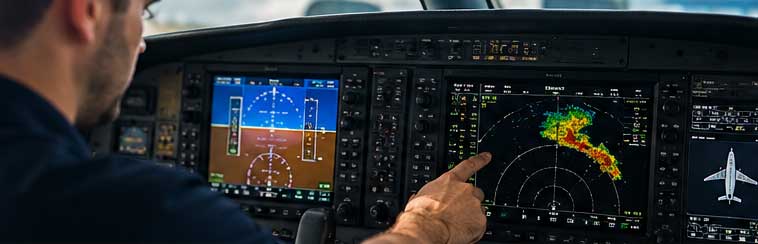
Start With What the Aircraft Is Telling You
A detailed description of the problem can point a technician in the right direction before a test instrument ever comes out of the toolbox.
- What exactly is happening and when?
- Does the problem happen every time you fly, or only occasionally?
- Does it happen on the ground?
- Does the issue arise after the aircraft has been flying for 30 minutes?
- Is it worse in certain weather?
- Did it start after recent maintenance?
The details above become even more important if the problem is not happening all the time. Anyone who has dealt with an intermittent avionics issue knows the frustration of the system having issues in the air, and working perfectly on the ground.
In these cases, a good description of what is happening can be just as valuable as the first round of testing.
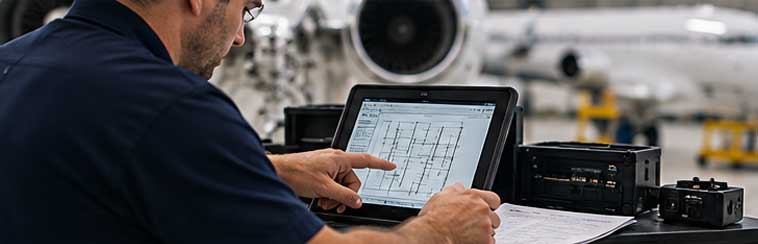
Then You Start Narrowing It Down
The first part of avionics troubleshooting is really a process of eliminating what isn’t causing the problem.
Depending on the system and reported problem, technicians may review the aircraft squawk and maintenance history, study wiring diagrams and installation data, verify power and grounds, inspect wiring and connectors, test antennas and coaxial cables, check signals and data interfaces, evaluate related equipment, and attempt to reproduce the fault.
Modern avionics share information through interfaces such as ARINC 429, CAN bus, serial data, Ethernet, and discrete signals. A unit displaying the problem may therefore be reporting incorrect or missing information originating somewhere else.
Experience helps here. After you’ve worked on enough aircraft and avionics systems, certain symptoms start to look familiar. But experience shouldn’t turn into guessing. You still have to test and confirm what’s actually happening.
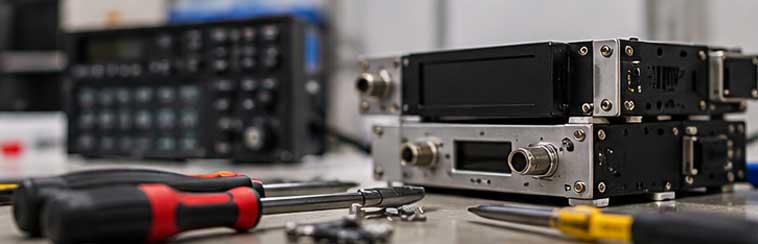
Avionics Troubleshooting: Is It the Box, or Is It the Aircraft?
This is often the big question.
Let’s say a piece of avionics equipment is acting intermittently. The quickest answer might seem to be pulling the unit for repair.
But if that unit checks out normally on the bench, you may not have solved anything. You have spent time removing and testing a component, the aircraft has experienced additional downtime, and the original problem may still be waiting when the unit is reinstalled.
At CE Avionics, part of our avionics troubleshooting process is determining whether the issue is actually inside the component or somewhere in the aircraft installation. If a component is suspected, bench testing can help confirm whether it has failed before everyone starts chasing a repair that may not be necessary.
Sometimes the box is bad. Sometimes the box is simply reacting to a problem somewhere else. Knowing the difference is the important part.
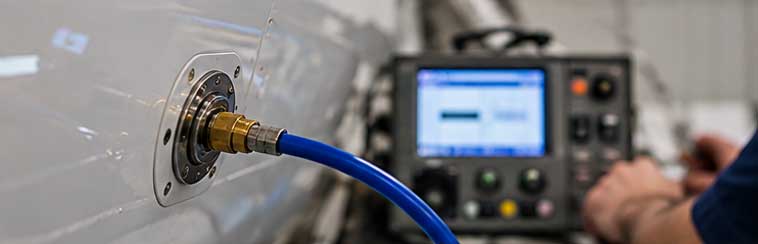
Some Avionics Problems Hide in Unexpected Places
Radio interference is a good example.
If you’re hearing static or having trouble with communications or navigation signals, your first thought might be that something is wrong with the radio. But the source of that interference could be somewhere else on the aircraft.
Static interference, poor bonding, antenna-system problems, and precipitation-static discharge can all affect communications and navigation performance. When appropriate, CE Avionics can perform P-static and related aircraft testing to help isolate the source of interference.
That’s a very different solution from simply replacing the radio.
The same thinking applies to other avionics issues. You have to follow the problem rather than assume the equipment showing the symptom is automatically at fault.
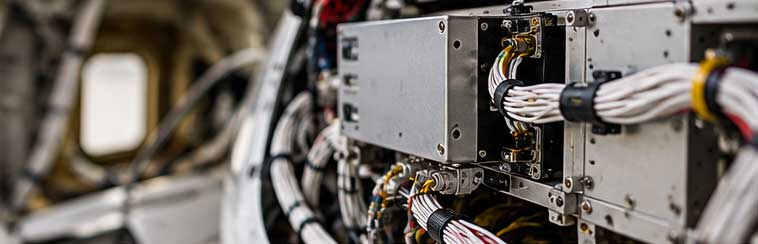
Some Avionics Problems Take Longer to Find
Every technician would love for a problem to show up on command. Unfortunately, aircraft don’t always work that way.
Aircraft issues that happen off and on may only happen when something gets warm, when the aircraft is vibrating, under a particular electrical load, or during certain flight conditions. By the time the aircraft is sitting in the hangar, everything may appear normal again.
Those are the problems that require patience and a methodical approach. Reproducing the fault can be one of the most difficult and time-consuming parts of troubleshooting.
Unlike replacing a known failed component, troubleshooting time can be difficult to predict because the technician is diagnosing an unknown condition. Instead of changing parts until the symptom disappears, the goal is to keep narrowing the possibilities: What can we rule out? What changed? Can we reproduce the problem? What does the test equipment tell us?
Eventually, the clues start pointing in the same direction.
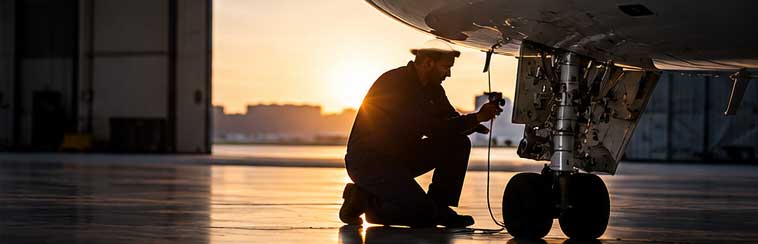
Find the Problem, Then Fix It
Good avionics troubleshooting isn’t about finding the fastest part to replace. It’s about understanding what the aircraft is actually telling you.
A methodical avionics troubleshooting process can be summarized as:
It sounds simple, but that process can save a lot of unnecessary time, parts, and aircraft downtime.
CE Avionics has been working with avionics, autopilot, flight instrumentation, communications, navigation, antennas, data interfaces, and aircraft electrical systems for more than 50 years. Over that time, one thing hasn’t changed: fixing the problem starts with finding the right problem. Dealing with an intermittent avionics problem or a squawk that has not been resolved? Contact CE Avionics and tell us what the aircraft is doing, when it happens, and what equipment is involved. That information gives our technicians a better starting point for finding the actual fault.